Transforming waste into value: Efficient rubber recycling powers the circular economy
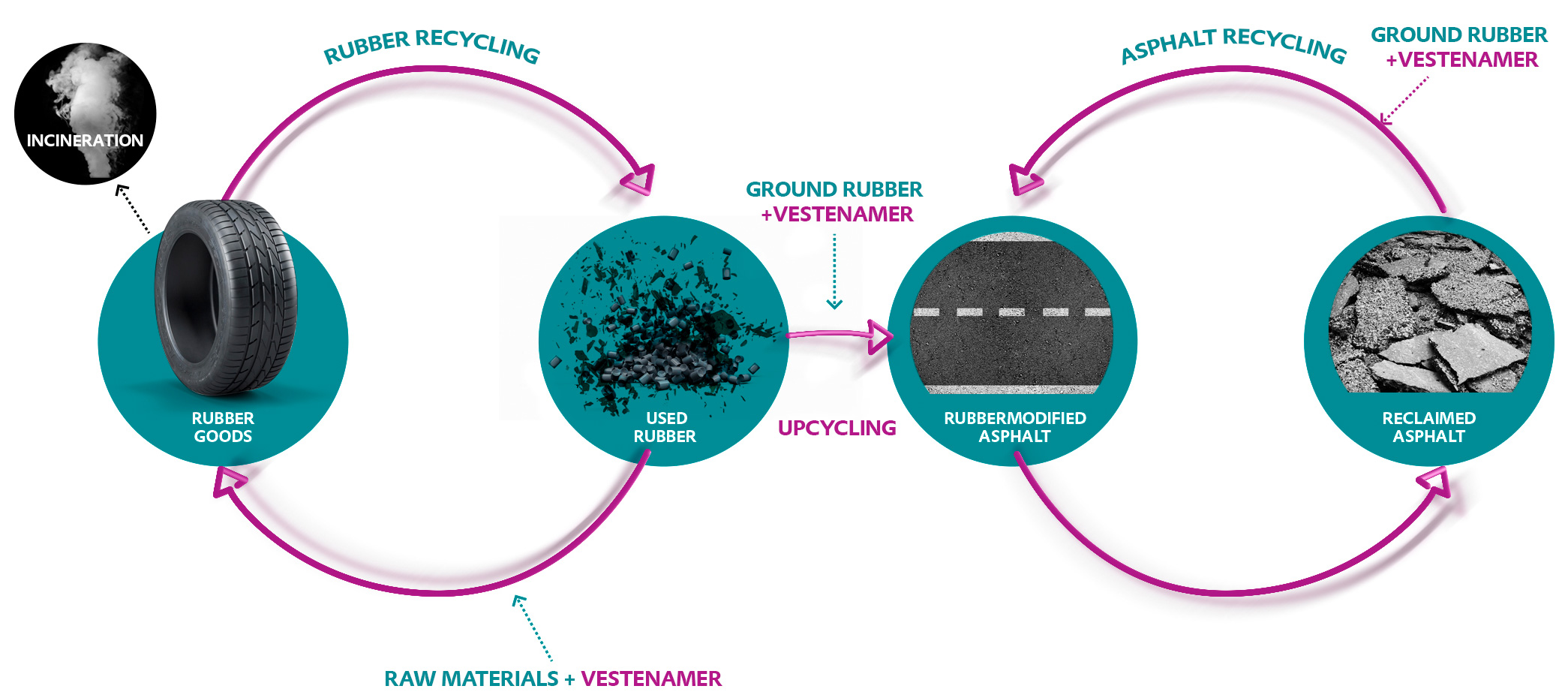
By recycling rubber, natural resources are conserved, energy is saved, and environmental pollution is reduced. The recycling process involves several steps, such as shredding old rubber products, removing contaminants, and converting them into new, useful materials. Mechanical, chemical, and thermal methods are used to clean and reprocess the material.
The resulting recycled rubber compounds can be used in new products such as seals, mats, or modified asphalt mixtures, supporting the circular economy by turning waste into valuable resources.
Learn more about our products and solutions



High-Performance technologies for more efficient rubber recycling
Evonik provides innovative and effective solutions to enhance the entire recycling process. Our specially developed additives and catalysts increase the efficiency of rubber recovery and improve the quality of recycled materials. Leveraging our expertise in specialty chemicals, we ensure a higher purity and performance of recycled rubber compounds through advanced technologies.
A notable example of Evonik's commitment to rubber recycling is our VESTENAMER® additive. This technology enhances the thermal stability and processability of recycled rubber, enabling the production of high-quality products from scrap rubber. Through this approach, Evonik not only supports waste reduction but also fosters the development of sustainable production processes in the rubber industry.